BASF CEO Markus Kamieth Presents New Strategy
In future, BASF, the Ludwigshafen, Germany-based chemicals group will differentiate between core businesses and standalone businesses and is examining strategic options.
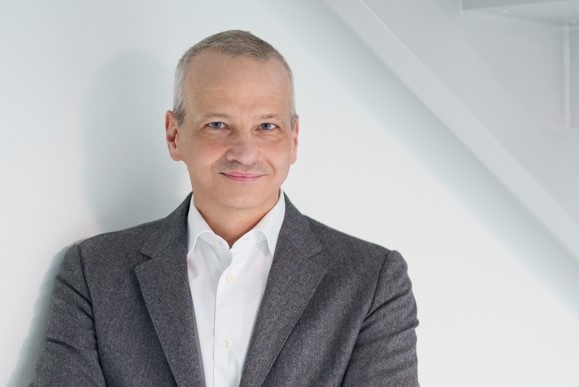
With the presentation of its corporate strategy, BASF is realigning itself: "We aim to be the preferred chemical company to enable the green transformation of our customers," said Markus Kamieth, CEO and Chairman of the Board of Executive Directors of BASF, during his keynote speech at the Capital Markets Day in Ludwigshafen, Germany: "The strong and diversified portfolio of chemical businesses at our core makes BASF indispensable - for customers worldwide and in a variety of industries. Those businesses that we manage as stand-alone businesses serve specific industries and are less closely linked to our integrated value chains. In the future, we will emphasize the full value of these businesses."
BASF aims to grow profitably and create value for its shareholders by providing first-class offerings for its customers. "We will focus even more on cash generation. We will emphasize capital discipline through lower capital expenditures and continue our cost savings programs," said Dirk Elvermann, Chief Financial Officer of BASF. In the medium term, BASF aims to maintain the total payout to shareholders at the level of previous years through a combination of dividends and share buybacks. BASF has thus set itself the target of distributing at least EUR 12 billion to shareholders from 2025 to 2028. Specifically, the company will pay a dividend of at least EUR 2.25 per share (2023: EUR 3.40) or around EUR 2 billion per year. This will already apply to the dividend for the 2024 financial year, which is to be paid out in 2025. The total dividend payout of around EUR 8 billion over the four-year period will be supplemented by share buybacks; these will be targeted from 2027 at the latest and are expected to amount to around EUR 4 billion.
The updated dividend policy is based on the following new financial targets of BASF:
- EBITDA pre exceptionals is expected to be between EUR10 billion and EUR12 billion in 2028 in moderate to good economic conditions.
- Cumulative free cash flow for 2025 to 2028 is expected to be more than EUR 12 billion.
- Return on capital employed (ROCE) is targeted at around 10% for 2028.
The company presented its new "Winning Ways" strategy along four strategic levers: Focus, Accelerate, Transform and Win.
Stringent portfolio management with clear roles for the businesses
With the Focus strategy lever, BASF is redefining its approach to portfolio management. The company now distinguishes between Core Businesses (Chemicals, Materials, Industrial Solutions and Nutrition & Care) and Standalone Businesses that serve specific industries (Environmental Catalyst and Metal Solutions, Battery Materials, Coatings, Agricultural Solutions). In this context, BASF announced that Environmental Catalyst and Metal Solutions and Battery Materials will be reported as separate divisions in the Surface Technologies segment as of January 1, 2025.
The BASF Core Businesses have considerable advantages over competitors: Due to their integration into BASF's value chains and production network at key sites, they create value through efficient resource utilization, operational excellence and cost efficiency. BASF's core businesses supply chemicals to growth industries and serve over 36,000 customers worldwide. In 2023, they generated sales of around EUR 6 billion with innovative products launched in the past five years. BASF is among the three market leaders in around 75% of these businesses. Kamieth: "We will strengthen these leading market positions in our core businesses through organic growth and disciplined, value-enhancing acquisitions. In doing so, we will continue our consistent approach to streamline businesses that are no longer of strategic importance to us or generate a low return."
BASF's standalone businesses serve specific industries and compete with competitors that focus exclusively on individual industries. Therefore, BASF will give them more strategic and operational flexibility to meet the specific needs of the markets in which they operate. "We will continue to invest in our stand-alone businesses, but also actively pursue portfolio options where this creates value for BASF and its shareholders," said Kamieth.
The Coatings division holds leading positions in its markets and generates strong earnings and cash contributions. The business is well positioned to achieve top performance. Against this background, BASF will evaluate strategic options to generate value and prepare a divestment process for the architectural coatings business in Brazil. Agricultural Solutions holds a leading position in the agricultural market and has a strong pipeline of innovations. By 2027, BASF will complete the separation of the business into separate companies with their own ERP (Enterprise Resource Planning) system. In a next step, the company wants to create the conditions for a possible IPO. In the medium term, this will create the opportunity to float a minority stake on the stock market.
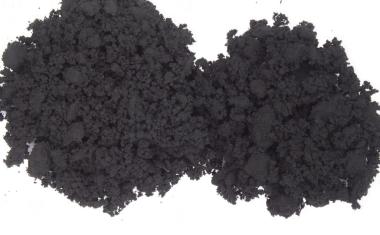
BASF's Battery Materials business operates in a fast-growing environment characterized by high market and technology risks. In light of recent market developments, BASF is mitigating the risk of further market development by focusing on the utilization of existing capacities and exploring cooperation opportunities along the entire value chain. BASF's Environmental Catalyst and Metal Solutions (ECMS) business is well positioned in the market in a low-growth industry. The business has been spun off since 2023 and continues to make a strong cash contribution.
Strengthening business and increasing ownership
With the Accelerate lever, BASF's new strategy aims to accelerate value creation and simplify the company's organization. BASF will strengthen its businesses through leaner and more differentiated Group management. The company is placing even greater responsibility for business success in the hands of the individual divisions. In this context, an improved performance management system will be introduced that creates a closer link between incentives and divisional performance. In addition, the company is simplifying and streamlining its organization by clarifying the distribution of roles, introducing flatter hierarchies and reducing bureaucracy. Management spans will be adjusted to increase personal responsibility.
BASF will also leverage the potential of artificial intelligence to increase productivity and accelerate innovation. BASF aims to achieve a significant improvement in earnings in the medium term through the global use of AI throughout the company.
Shaping a value-oriented transformation towards a sustainable product portfolio
The focus of Transform is on driving the green transformation. "BASF's key customer industries face enormous challenges in achieving their transformation goals. We supply the chemical products that support our customers on this journey," says Kamieth. BASF is taking a step-by-step approach to the green transformation, in line with growing customer demand. In a first phase, BASF has increasingly focused on renewable electricity, tested new technologies and brought sustainable products to the market. Today, BASF already offers thousands of products with reduced or even net zero carbon footprint (PCF) in its broad portfolio.
In a second phase, BASF will increasingly secure renewable raw materials and increase the volumes of products with sustainable properties according to customer needs. As with its approach to renewable energy, BASF will establish a dedicated unit for renewable raw materials. The company's step-by-step transformation approach is also reflected in its spending: Transformation-related spending is expected to average EUR 600 million per year from 2025 to 2028.
BASF remains fully committed to its climate protection targets: By 2050, the company is aiming for net-zero greenhouse gas emissions for production (Scope 1), energy procurement (Scope 2) and raw material procurement (Scope 3.1). By 2030, BASF aims to reduce Scope 1 and Scope 2 emissions by 25% compared to 2018. In addition, the company has set itself the goal of reducing its specific Scope 3.1 emissions by 15% by 2030 compared to the base year 2022.
Ongoing adjustment of structures at the Ludwigshafen site to ensure long-term success
The objective for the Ludwigshafen site is to be a leading, sustainable chemical site for Europe and a strong cornerstone for BASF's success. Katja Scharpwinkel, member of the Board of Executive Directors and site manager of BASF, explains: "We have carried out a thorough analysis of our production plant structure in Ludwigshafen based on current and future market and customer requirements for chemicals. The majority of the plants are competitive in their respective markets. However, our results also show that individual plants and production lines are no longer generating sufficient yields due to a lack of competitiveness or structural underutilization."
Initial plant adjustment measures derived from this analysis are already being implemented, e.g. the closure of the plants for adipic acid, cyclododecanone (CDon) and cyclopentanone (CPon), which was announced at the end of August 2024. Scharpwinkel: "Further measures to adapt plants are currently being examined and will be implemented step by step where necessary."
In addition, BASF will adapt its structures outside of production in Ludwigshafen and significantly reduce costs through a comprehensive package of measures. As already announced, BASF is aiming for ongoing total annual savings of around EUR 2.1 billion by the end of 2026. "The Ludwigshafen site will be leaner but stronger. It will have a better competitive position on the European market and will be able to operate successfully in the medium and long term," says Scharpwinkel.
The BASF analysis also shows that all important value chains are competitive in their markets and that BASF will benefit from the dynamics of change in the context of the green transformation. The site's integrated Verbund system offers unique advantages to provide customers with solutions that enable their green transformation. This is due to the Verbund's energy and resource efficiency, as well as the numerous feed-in points that offer raw material flexibility and the ability to use renewable and recycled raw materials in existing plants in a flexible and scalable way.
Cultural change to boost performance
With "Win", BASF will increase ownership, speed and performance orientation throughout the company. "BASF has the best team in the chemical industry. But we need to change so that employees take more ownership, make decisions faster and we can improve our performance. Our Winning Culture will be a decisive factor in the successful implementation of our strategy," says Kamieth.