Asahi Develops CO2 Route to Diphenyl Carbonate
Japan’s Asahi Kasei has developed a new and safer route to produce diphenyl carbonate (DPC), using carbon dioxide (CO2) as a feedstock instead of phosgene, which is highly toxic. DPC is a feedstock used to make polycarbonate (PC).
In the two-step process, DPC is produced via dialkyl carbonate (DRC), using catalysts to produce DRC from CO2 and alcohol in a first stage and then producing DPC from DRC and phenol in a second stage.
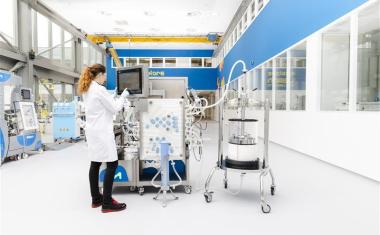
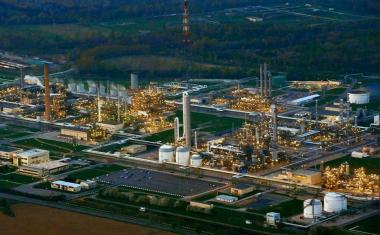
The Tokyo-headquartered group has built a plant at its Mizushima works in Urashiki, Okayama, where it has validated the process’s stability and operability from more than 1,000 hours of continuous operation. It said that, compared to the traditional process, the new technology successfully reduced energy consumption and CO2 emissions.
Work will now continue to verify the process’s economy and energy efficiency, as well as to further optimize operating conditions and equipment as the company progresses to commercialization. Asahi Kasei said that validation of this process will strengthen and expand the group’s licensing business, which includes its non-phosgene PC technology that has been sold in countries such as China, South Korea, Taiwan, Russia and Saudi Arabia.
Asahi developed the DPC process as part of a project under Japan’s New Energy and Industrial Technology Development Organization (NEDO), which supports the development of energy-efficiency technologies.