Arkema Acquires a Stake in Battery Start-up Tiamat
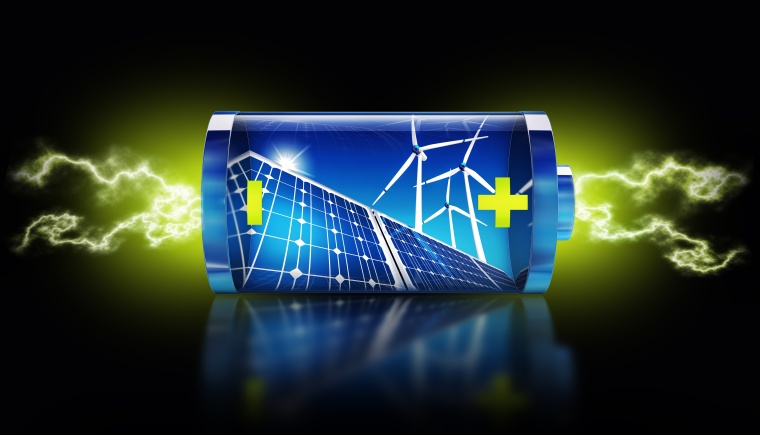
French chemical producer Arkema announced that it will become a shareholder of Tiamat, a start-up that designs, develops, industrializes and markets sodium-ion batteries, a new lithium-free technology. Tiamat was spun off from the Centre National de la Recherche Scientifique (CNRS) in 2017.
This investment will enable the Arkema to accelerate the development of technical solutions adapted to these batteries, which do not use lithium and can help to avoid the constraints associated with the supply of this metal.
Alongside strategic investors such as Stellantis Ventures and MBDA, Arkema contributed to Tiamat's recent €22 million fund-raising. With these funds as well as the support of the French government and the European Union, Tiamat wants to build a 5 GWh Giga-factory in France to produce sodium-ion battery cells. An initial tranche of 0.7 GWh could be operational by the end of 2025, and around 1,000 jobs could eventually be created, Arkema said.
"Our portfolio of advanced materials enables us to provide solutions for all our customers' battery technologies. The sodium-ion technology developed by Tiamat is very interesting, as it will enable to do away with the dependence to lithium and several strategic metals. This operation enriches our ecosystem and is perfectly in line with Arkema's strategy: innovative materials for a sustainable world" comments Armand Ajdari, Arkema's chief technology officer.