Aramco, Sumitomo Chemical Plan $7 Billion Petrochemical Expansion
Saudi Aramco and Sumitomo Chemical plan to go ahead with a $7 billion expansion of a petrochemical project in the kingdom, the Japanese firm said on Friday, quelling doubts over the future of the delayed development.
Japan's Sumitomo said it was pressing on with the Rabigh II project, due to start operations in early 2016, as it expects the market to pull out of a recent slump due to long-term economic growth in China and resilient demand in Europe.
The plastics industry is facing slowing demand as car sales ease in large emerging markets such as India, while higher raw material costs on the back of rising oil prices weigh on margins.
"The industry is now at a low point, but we are not worried about its long-term prospects," Osamu Ishitobi, vice president of Sumitomo Chemical, told a news conference.
But one analyst said that competition from a possible revival in the U.S. petrochemical industry driven by shale gas could have been a factor in the decision.
"If they further delayed making a decision, that would offer the U.S. industry a bigger chance of regaining its competitiveness in the global market," said Osamu Fujisawa, an independent oil economist based in Japan.
In Saudi Arabia, the price of ethane, a raw material used for building plastics, is lower than international prices, providing cheap fuel for petrochemical plants.
For state-run Saudi Aramco, it is a steady revenue source, and part of its plan to expand its petrochemicals industry and diversify its energy portfolio and boost earnings from downstream activities.
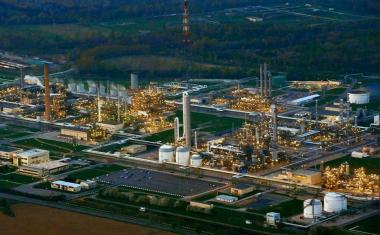
Under Rabigh II, an existing ethane cracker will be expanded and a new aromatics complex will be built using around 3 million tons per year of naphtha to make higher-value petrochemical products.
Another analyst questioned whether the project would come online in 2016, however.
"The toughest question we face is when is the (market) recovery due? Will demand recover fast enough? Aramco said the project will now be in 2016, but I doubt that will happen," said Mazlan Razak of Nexant Asia.
Saudi Aramco and Sumitomo each own 37.5% of Rabigh Refining & Petrochemical, better known as Petro Rabigh.
The phase I Rabigh project was completed in 2009 at a cost of $10 billion. Aramco and Sumitomo signed an agreement on the plant expansion in that year with contracts for the work due to be announced by 2011.
In July last year, Dow Chemical announced a $20 billion investment with Saudi Aramco to build one of the world's largest petrochemical facilities near Saudi Arabia's vast oil and natural gas reserves. The joint venture, to be called Sadara Chemical, will annually produce more than 3 million metric tons of the chemical products and plastics used in packaging, furniture, electronics and scores of other consumer goods.