Al Sejeel Petchems Project in Qatar Put on Ice
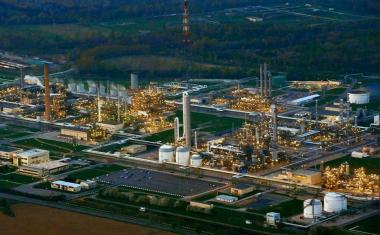
Industries Qatar (IQ) has announced completion of a new CO2 recovery plant at its fuel additives joint venture Qafac. At the same time it has revealed that the large Al Sejeel petrochemical complex at Ras Laffan, planned to be operated by an 80:20 joint venture of Qatar Petroleum and Qatar Petrochemical Company (Qapco), has been put on ice.
IQ holds the majority stake in Qapco, with France's Total Petrochemicals as partner. Instead of the original plans, the Qatari firm said a new downstream petrochemical project, expected to yield better economic returns, is under study.
Construction on the $5.5-6 billion Al Sejeel project, initially expected to start up in 2018, was due to begin in early 2015. The complex would have produced 1.4 million t/y of ethylene, 1.04 billion t/y year of HDPE (two lines with capacity of 520,000 t/y), 550,000 t/y of LDPE, 430,000 t/y of LLDPE, 760,000 t/y of polypropylene and 83,000 t/y of butadiene.
IQ's CO' plant, billed as the largest of its kind to produce feedstock for methanol production, is designed to capture more than 500 t/d. Not only will the facility reduce greenhouse gas emissions, it also will boost output of methanol by 46,000 t/y, Qafac said.